



The São Jorge Castle stands at the top of the highest hill and was conquered to the moors by Afonso Henriques the first king of Portugal in 1147. It offers a wonderful 360 degree view of the entire city that extends from the hills of Lisbon to the Tagus River.
Drop the anchor at Belém, where Vasco da Gama once prepared for his New World voyage. With a stunning selection of cultural venues, some of Lisbon's most striking historic monuments related with the Age of the Discoveries, and magnificent waterfront views, Belém is one of the capital's most visited areas. Here you can find the Monastery of Jerónimos (a UNESCO World Heritage Site), the Belém Tower, the Maritime Museum and the Monument to the Discoveries.
When you walk its highly pedestrianized streets and marvel at its architectural splendor, it's hard to believe there's a dramatic story behind its construction. In the aftermath of the deadly 1755 earthquake, Baixa (lower town) was raised as one of the first examples of earthquake-resistant constructions and is today held to be a beating heart of Lisbon, with its neoclassical design and ground-breaking urban planning. It is unbelievably romantic and elegant, just see for yourself strolling down the Rua Augusta, past the triumphal arch, and into the glorious Praça do Comércio, shopping along Avenida da Liberdade or tasting pastries at the splendid Praça de D. Pedro IV also known as Rossio.
Lisbon’s Funiculars and Elevators
The public elevators are one of the most popular touristic attractions in Lisbon. Currently, there are four of such funiculars all operated the city’s public transport company. All were designed by Raoul Mesnier du Ponsard, an engineer of French descent born in Oporto and contemporary of the renowned engineer Gustave Eiffel. In February 2002, they were all classified as Portuguese national monuments. They result from a public improvements policy, launched in the late nineteenth century in order to make life easier for the population of the seven hills of the city, helping it to overcome the steep Lisbon’s natural slopes. Nowadays, thousands of tourists visit daily the Santa Justa elevator. You simply feel compelled to get to the top of the city's best-loved landmarks, a 45-meter high, neogothic structure that connects the lowest and highest points of the city: the Baixa (Lower town) and Bairro Alto (Upper Town).The upper terrace is reached by spiral staircases and has one of Lisbon’s best views.
The lifts of Glória, Bica and Lavra are still used by locals as visited by travelers. They are open every day of the year and offer, in addition to a real touristic experience, good opportunities to exercise the photographic sense of theirs passengers.
Lisbon's cultural and bohemian heart, the nightlife and shopping mecca are probably the words to introduce Bairro Alto in a nutshell. The quarter has a streak of Jekyll-and-Hyde to it, for with its calm and relatively quiet streets at daytime, it does not resemble the vibrant and jostling party-like neighborhood at night. Explore with intensity the sleek bars, stylish alternative fashion shops and a multitude of colorful, graffiti-sprayed facades to discover a highly explosive (and luring) mixture of Lisbon's music subcultures and party animals that all have Bairro Alto as their home.
There is probably no better suited place to experience the nostalgia of Fado than Alfama, the oldest district of Lisbon spreading down the slope between the Castle of Lisbon and the Tagus River, one that withstood the earthquake of 1775. Here it is easy to get lost among the Lisbon Cathedral, the Museum of Decorative Arts, and several observation points that offer amazing views. But many don't want to find their way back anyway for Alfama mesmerizes with narrow cobbled streets, Azulejos-tiled walls and Fado melancholy songs in little bars.
Inaugurated in 1998 as one of the attractions of the World Exhibition of Lisbon (EXPO'98), the Oceanário de Lisboa is the second-biggest aquarium in the world. The impressive stone-and-glass structure features four aquariums replicating the abundant ecosystems of the Atlantic, Pacific, Indian, and Antarctic oceans. The center is dominated by a giant 5-million-liter tank which represents all the oceans as one. The visit is a must, for there is probably no better school to give you so perfectly animated, illustrated and sea-voiced lesson on underwater wonders.
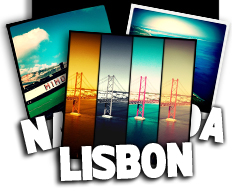
Cristo Rei stands on the left side of the River Tagus and embraces the whole city with his patronizing, wide-stretched arms. Bearing an obvious resemblance to the Corcovado monument in Rio De Janeiro, it was built in 1959 in order to thank God for saving Portugal from widespread destruction during WWII, and has become one of Lisbon's most highly esteemed icons ever since. Once you reach the top of its 82-meter high pedestal, religious adoration will mix with awe-inspiring, bird's-eye experience of the city's grandeur, including a sweeping view of the 25 de Abril Bridge, another marvel that there's just no way to miss.
In Sintra’s hills stands the Pena Palace, modeled on the romantic castles of Bavaria. Built in 1843, this palace is a blend of artistic styles that fit harmoniously with the earthly and mysterious atmosphere of Sintra. This palace was a dream of the King consort D. Ferdinand of Saxe-Coburg-Gotha, husband of Queen Maria II. Surrounding the Palace, there is the Pena Park which is over 494 acres big with gardens, ponds, bridges, caves, greenhouses and small houses.


